


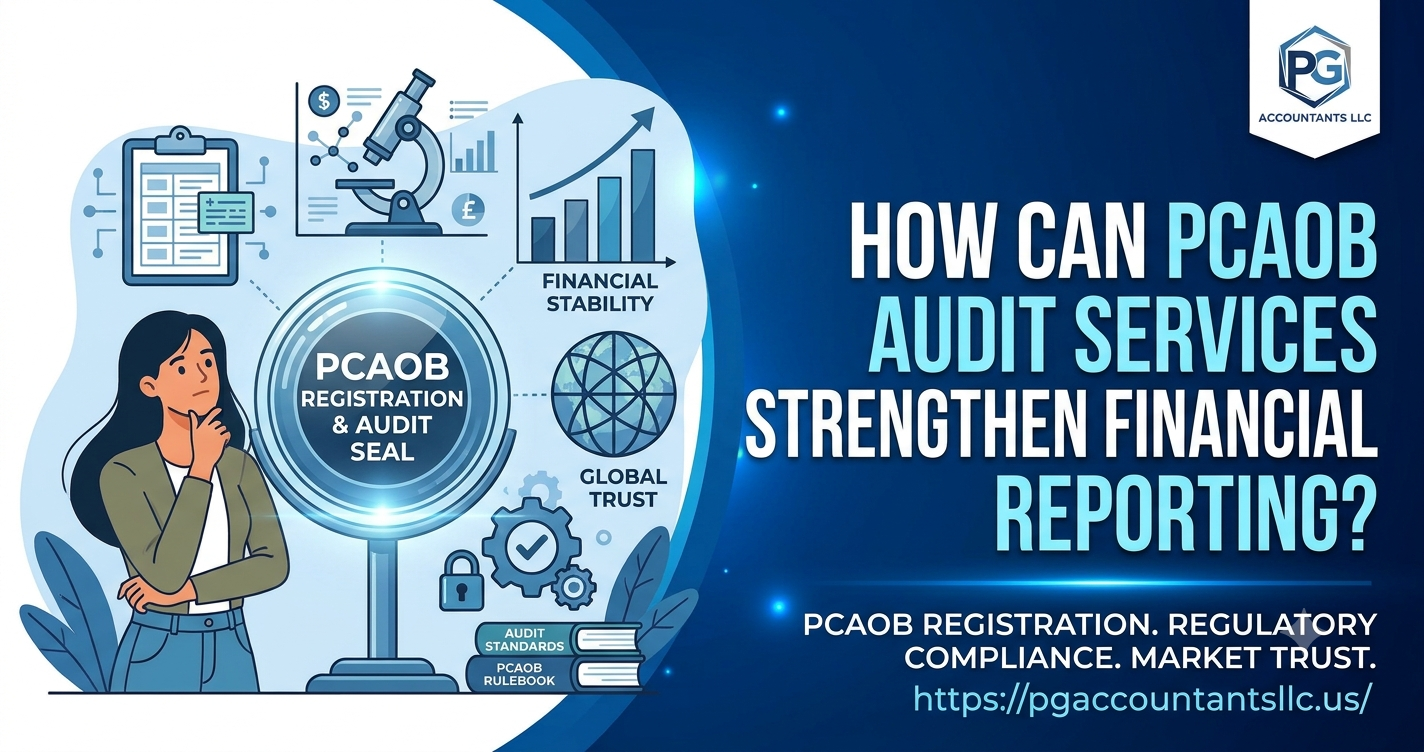
Financial reporting is more than a collection of numbers on a balance sheet or income statement. For businesses operating in environments where regulatory requirements, investor expectations and financial complexity are high, the quality and reliability of financial reporting can have a significant impact on business confidence. This is where PCAOB audit services can play an important role. A PCAOB audit follows standards established by the Public Company Accounting Oversight Board for registered public accounting firms conducting applicable audits. These standards address areas such as audit planning, risk assessment, audit evidence, internal controls, documentation, audit results and reporting. But how exactly can this strengthen financial reporting?
Quick Answer: How Can PCAOB Audit Services Strengthen Financial Reporting?
PCAOB audit services can strengthen financial reporting by applying a structured, independent audit process to financial statements and, where applicable, internal controls over financial reporting. The process can help identify potential material misstatements, evaluate relevant audit evidence, assess financial statement presentation and disclosures, and identify issues relating to internal controls. PCAOB standards specifically require auditors to evaluate whether sufficient appropriate evidence supports the audit opinion and to consider misstatements, accounting practices, fraud risks, presentation and disclosures. The result is not simply an audit report. A well-conducted audit can contribute to greater confidence in the financial information being presented to investors and other financial statement users.
- PCAOB Audits Bring a Structured Approach to Financial Reporting : Financial reporting can become increasingly complex as a business grows. Multiple entities, complicated transactions, changing accounting requirements, international operations and regulatory obligations can all increase the demands placed on financial reporting teams. PCAOB auditing standards establish requirements covering areas such as:
- Audit planning
- Risk assessment
- Audit evidence
- Audit documentation
- Internal control over financial reporting
- Audit committee communications
- Evaluation of audit results
- Auditor reporting
This structured framework helps auditors approach financial statement audits systematically rather than treating financial reporting as a simple checklist.
- They Help Identify Risks of Material Misstatement : One of the fundamental objectives of a financial statement audit is obtaining reasonable assurance about whether the financial statements are free of material misstatement, whether caused by error or fraud. PCAOB standards include specific requirements for identifying and assessing risks of material misstatement. This matters because financial reporting issues are not always obvious from reviewing the final numbers alone. A structured audit process can direct attention toward areas where the risk of material misstatement may be greater, allowing appropriate audit procedures to be performed in response to those risks.
- Internal Controls Can Become Part of the Conversation : Strong financial reporting depends not only on accounting processes but also on the controls surrounding those processes. PCAOB AS 2201 addresses audits of internal control over financial reporting that are integrated with audits of financial statements. The standard explains that effective internal control over financial reporting provides reasonable assurance regarding the reliability of financial reporting and the preparation of financial statements for external purposes. This makes internal controls an important consideration when evaluating the overall strength of a company’s financial reporting environment. Depending on the engagement and applicable requirements, an audit may therefore provide insight into areas where financial reporting controls need greater attention.
- Audit Evidence Supports More Reliable Conclusions : An audit opinion needs to be supported by appropriate audit evidence. PCAOB AS 2810 requires auditors to evaluate whether they have obtained sufficient appropriate audit evidence to support the opinion expressed in the auditor’s report. The evaluation also considers accumulated misstatements, accounting practices, fraud risks, financial statement presentation and disclosures. This is important because financial reporting should not be evaluated solely on whether the numbers appear reasonable. Auditors need evidence that supports the conclusions reached during the engagement.
- Financial Statement Presentation and Disclosures Matter Too : Financial reporting is not only about getting the numbers right. How financial information is presented and disclosed can also affect how users understand a company’s financial position and performance. PCAOB’s requirements for evaluating audit results specifically include consideration of the presentation of financial statements, including disclosures. A comprehensive audit process therefore considers the financial statements as a whole rather than focusing only on individual account balances.
- Quality Control Adds Another Layer of Discipline : The quality of an audit depends on more than the procedures performed during a single engagement. PCAOB requirements also address quality control within registered public accounting firms. The PCAOB’s new QC 1000 standard, which becomes effective December 15, 2026, establishes a risk-based system of quality control covering areas including governance, ethics and independence, engagement performance, resources, information and communication, and monitoring and remediation. This broader quality framework is designed to support consistent engagement performance and the issuance of informative, accurate and independent reports.
- PCAOB Audits Can Strengthen Confidence Among Financial Statement Users : Financial reporting ultimately serves people who rely on that information. That can include investors, lenders, management, boards, audit committees and other stakeholders. PCAOB’s general auditing standard states that properly conducted audits and related auditor reports enhance confidence in financial statements and, when applicable, internal control over financial reporting. This is one of the most important benefits of a rigorous audit process. The objective isn’t to suggest that an audit eliminates financial or business risk. Rather, an independent audit provides a structured basis for evaluating whether financial statements are fairly presented in accordance with the applicable financial reporting framework.
- Documentation Creates a More Traceable Audit Process : Good financial reporting requires documentation, and so does a properly conducted audit. PCAOB AS 1215 establishes requirements for documentation that auditors prepare and retain for engagements conducted under PCAOB standards, including financial statement audits and audits of internal control over financial reporting. Proper documentation helps create a record of the work performed, evidence obtained and conclusions reached during the engagement. For businesses dealing with complex financial reporting requirements, this level of discipline can be particularly important.
What Should Businesses Look for in PCAOB Audit Services?
Choosing an audit firm involves more than looking for a firm that can complete an audit. Businesses should consider factors such as:
- PCAOB experience: Does the firm have experience working with PCAOB requirements and complex audit engagements?
- Financial reporting expertise: Can the team work effectively with the applicable financial reporting framework?
- Regulatory understanding: Does the firm understand the regulatory environment relevant to the business?
- Internal control expertise: Can the audit team appropriately evaluate relevant controls where required?
- Quality processes: Does the firm have appropriate quality control and review processes?
- Industry and transaction complexity: Does the firm have the experience needed to understand the company’s specific financial and operational circumstances?
For organizations dealing with PCAOB, SEC, U.S. GAAP or IFRS-related requirements, these considerations can be particularly important when selecting an audit partner.
How Can PG Accountants LLC Support PCAOB Audit Requirements?
PG Accountants LLC is positioned around audit and assurance, tax compliance and advisory, and financial reporting services. Its audit-focused capabilities are designed around complex regulatory and financial reporting requirements, including PCAOB-related work and U.S. GAAP and IFRS considerations. For businesses that need more than basic accounting support, the combination of audit, financial reporting and advisory capabilities can provide a broader perspective on financial compliance and reporting requirements. This is particularly relevant when businesses are preparing for complex audits, regulatory requirements or significant financial reporting milestones.
FAQs
What are PCAOB audit services?
PCAOB audit services are audit engagements performed under the standards and requirements established by the Public Company Accounting Oversight Board for applicable entities and engagements. PCAOB standards cover areas including audit planning, risk assessment, evidence, internal controls, documentation and reporting.
How do PCAOB audits improve financial reporting?
They provide a structured independent examination of financial statements and, where applicable, internal controls over financial reporting. The process includes evaluating audit evidence, potential misstatements, accounting practices, fraud risks and financial statement presentation and disclosures.
Do PCAOB audits guarantee that financial statements contain no errors?
No. An audit provides reasonable assurance, not absolute assurance. PCAOB standards describe the auditor’s objective as obtaining reasonable assurance about whether financial statements are free of material misstatement.
Why are internal controls important for financial reporting?
Effective internal control over financial reporting provides reasonable assurance regarding the reliability of financial reporting and preparation of financial statements for external purposes.
What should businesses consider when choosing PCAOB audit services?
Businesses should consider the firm’s PCAOB experience, financial reporting expertise, regulatory knowledge, quality processes, internal control capabilities and experience with the complexity of their particular reporting environment.
Why is financial reporting important for investors?
Reliable financial reporting gives investors and other financial statement users information they can use to evaluate a company’s financial position and performance. PCAOB standards recognize the role of properly conducted audits and auditor reports in enhancing confidence in financial statements.
Strong financial reporting is built on more than accurate accounting entries. It requires appropriate processes, controls, evidence, documentation and oversight. PCAOB audit services bring a structured and independent approach to evaluating financial statements and, where applicable, internal controls over financial reporting. By addressing risks, evaluating audit evidence and assessing financial statement presentation and disclosures, the audit process can strengthen confidence in the information a business presents to its stakeholders. For businesses navigating complex financial reporting, regulatory or audit requirements, choosing an experienced audit partner can make an important difference. PG Accountants LLC brings together audit, financial reporting, tax and advisory capabilities to support businesses with complex accounting and compliance needs.
Note: This article is intended for general educational purposes and should not be considered legal, accounting or regulatory advice for a specific situation. Applicable PCAOB, SEC and financial reporting requirements depend on the entity, engagement and reporting circumstances.
Post a comment
Related Posts
October 26, 2026
What Should You Look for When Choosing Audit Services in Houston, TX?
Choosing the right audit firm is essential for maintaining accurate financial reporting, meeting regulatory requirements,…
October 26, 2026
How Can a CPA Firm in Texas Help Your Business Stay Financially Compliant?
Maintaining financial compliance is essential for businesses that want to operate responsibly, manage reporting obligations,…
October 26, 2026
Is Your Company Ready for a Public Company Audit? 7 Things to Review First
Preparing for a public company audit requires accurate financial records, reliable internal controls, and well-organised…

October 26, 2026
Why Is Financial Planning Important Before You Start Investing?
Investing can be an important part of building long-term financial wealth, but deciding where to…


