


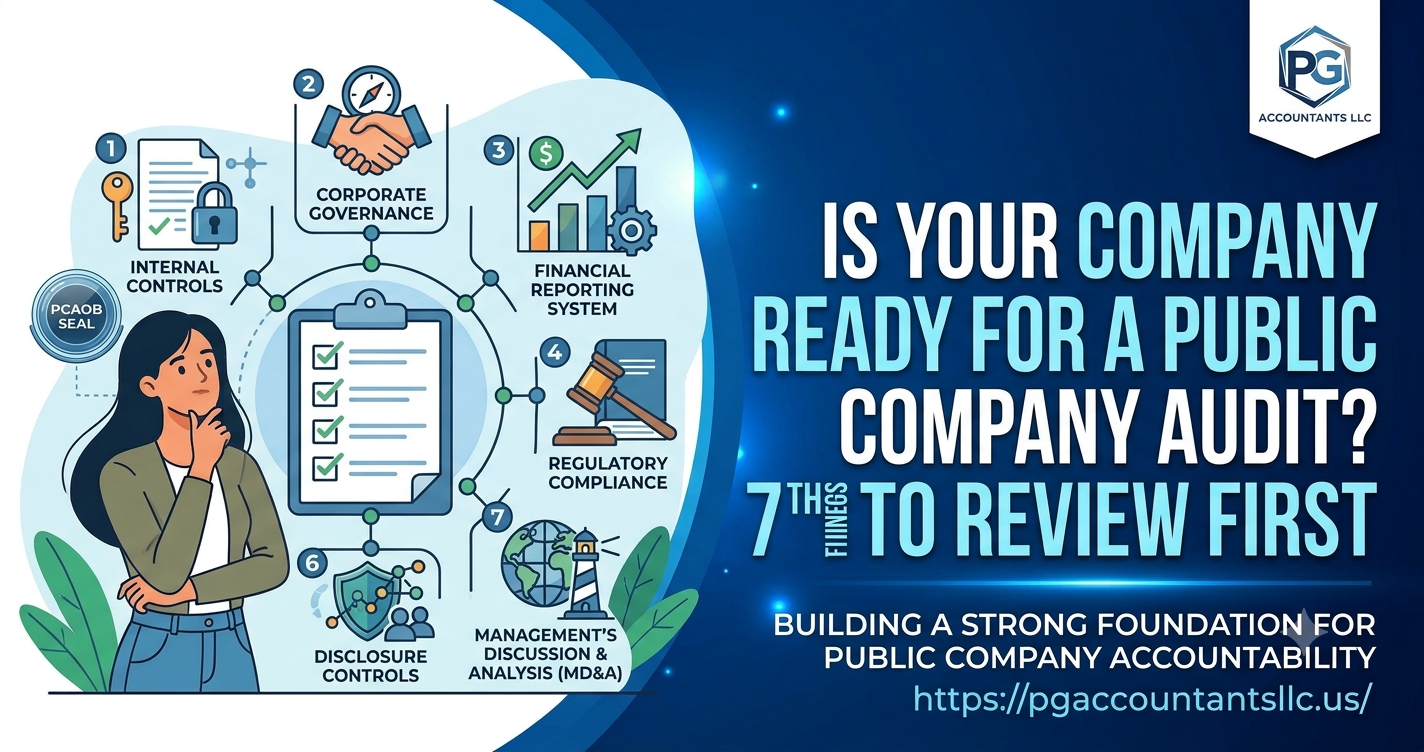
Preparing for a public company audit requires accurate financial records, reliable internal controls, and well-organised documentation. Companies seeking public company audit services should review their financial reporting processes early to identify potential issues and prepare for applicable regulatory requirements. Here are seven important areas to review before an audit begins.
- Financial Statements and Accounting Records : Ensure your financial statements are complete and supported by accounting records. Review account reconciliations, significant transactions, and outstanding adjustments to identify discrepancies before the audit.
- Internal Controls Over Financial Reporting : Review the controls used to authorise transactions, safeguard assets, and prepare financial statements. Document key processes and responsibilities, and address identified control deficiencies appropriately.
- Supporting Documents and Audit Evidence : Organise contracts, invoices, bank statements, reconciliations, and supporting schedules. Clear documentation helps auditors understand the basis for financial statement balances and management’s conclusions.
- Compliance With Applicable Reporting Standards : Determine which accounting and auditing requirements apply to your company. Public companies may have obligations involving U.S. GAAP, SEC reporting, and PCAOB auditing standards, depending on their circumstances.
- Significant Accounting Estimates and Disclosures : Review complex estimates, accounting judgements, and financial statement disclosures. Ensure assumptions are documented and supporting evidence is available for areas requiring significant management judgement.
- Audit Timelines and Team Responsibilities : Establish a clear audit timetable and assign responsibilities to your finance team. Identify who will provide documentation, respond to auditor questions, and coordinate communication with management and the audit committee.
- Choosing the Right Audit Firm : Select an audit firm with the qualifications and experience required for your engagement. Consider its relevant regulatory expertise, audit methodology, communication practices, and ability to meet your company’s reporting needs.
PG Accountants LLC is a PCAOB-registered accounting firm offering audit, assurance, financial reporting, tax, and advisory services. Explore its official website to learn more about its capabilities.
Frequently Asked Questions
What are public company audit services?
Public company audit services involve independent audits of financial statements and, where applicable, internal control over financial reporting, performed under relevant professional and regulatory requirements.
How can a company prepare for a public company audit?
Companies should organise financial records, review internal controls, prepare supporting documentation, assess significant accounting judgements, and establish a clear audit timetable.
Why are internal controls important in a public company audit?
Internal controls help support reliable financial reporting and reduce the risk of errors. Their evaluation and testing depend on the nature and scope of the audit.
How do you choose a public company audit firm?
Evaluate the firm’s qualifications, relevant registration, experience with applicable reporting requirements, audit quality processes, and ability to meet your company’s needs.
Preparing early can help companies identify reporting issues, organise supporting evidence, and coordinate their finance teams before an audit begins. Reviewing these seven areas provides a practical starting point for improving audit readiness. If your organisation is evaluating public company audit services, consider working with a qualified firm that understands the relevant audit standards and financial reporting requirements.
Disclaimer: This article is intended for general informational and educational purposes only and should not be considered professional accounting, auditing, tax, or legal advice. Audit requirements and regulatory obligations may vary depending on the nature of your business and applicable laws and standards. Consult a qualified professional for advice specific to your circumstances.
Post a comment
Related Posts
October 26, 2026
What Should You Look for When Choosing Audit Services in Houston, TX?
Choosing the right audit firm is essential for maintaining accurate financial reporting, meeting regulatory requirements,…
October 26, 2026
How Can a CPA Firm in Texas Help Your Business Stay Financially Compliant?
Maintaining financial compliance is essential for businesses that want to operate responsibly, manage reporting obligations,…
October 26, 2026
How Can PCAOB Audit Services Strengthen Financial Reporting?
Financial reporting is more than a collection of numbers on a balance sheet or income…

October 26, 2026
Why Is Financial Planning Important Before You Start Investing?
Investing can be an important part of building long-term financial wealth, but deciding where to…


